
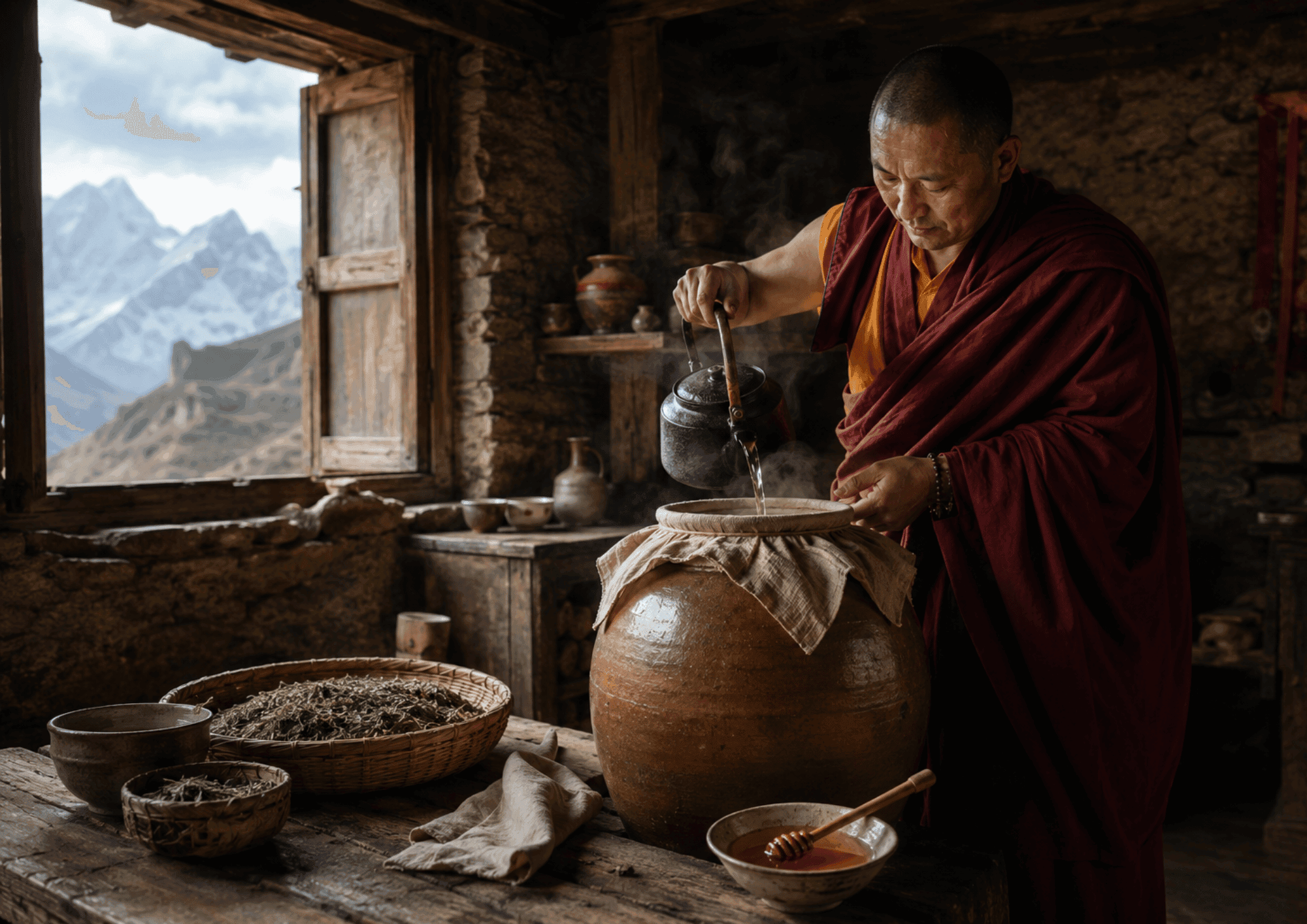
Ask the internet where Jun comes from and Tibet appears very quickly. You will read about monks, secret cultures and a sacred drink passed down for generations.
It is a great story. Maybe a little too perfect.
We became curious because we kept seeing the same claim repeated, but rarely with a source behind it. So we went looking for what is actually known about Jun and where the history starts to get blurry.
The story people tell
The most common version says Jun was brewed by Bön monks in Tibet using green tea and honey. Some accounts describe it as a spiritual drink, while others say the culture was kept within monasteries and shared only in small circles.
We could not find a reliable Tibetan record that confirms any of that. It does not mean nobody in Tibet ever fermented tea with honey. It simply means the monastery story should be treated as folklore rather than established history.
What we do know about tea in Tibet
Tea itself has a long and well documented connection with the Tibetan Plateau. In 2016, researchers published evidence of tea found at the Gurgyam Cemetery in western Tibet. Chemical markers and plant remains showed that tea had reached the region by around the second or third century CE.
The discovery matters because it places tea on an early branch of the Silk Road much earlier than written records had suggested. The researchers believe the tea may have been consumed with barley and other plants, in a way closer to traditional butter tea. You can read the Scientific Reports study here.
What the evidence does not show is Jun. There was no sign that the tea had been fermented with honey or with a culture of bacteria and yeast.
So is Jun ancient?
The honest answer is that we do not know.
Fermented foods rarely come with a birth certificate. Cultures move between households, recipes change and most everyday food traditions are not written down. It is completely possible that people fermented tea and honey long before the name Jun became common.
What is missing is proof of an unbroken Tibetan tradition. Fermentation writer Sandor Katz also questioned the popular origin story. In The Art of Fermentation, he points to the lack of credible historical information and suggests Jun may be a more recent branch of the kombucha family.
That explanation is less romantic, but it fits the evidence we have.
The Jun we know today
Modern Jun is much easier to describe. It is fermented tea made with green tea and honey, using a culture of bacteria and yeast. The process is related to kombucha, but the ingredients create a noticeably different drink.
Green tea gives it a lighter base. Honey brings a softer, more floral sweetness. Fermentation adds acidity and natural fizz. The result tends to be smoother than the sharp kombucha flavour many people expect.

Why we chose Jun
We did not start making Aroā because of a story about monks. We started because we liked what happened when green tea and raw honey were fermented together.
The drink was light, gently sparkling and easy to enjoy cold. It had enough character to be interesting without the strong vinegar taste that puts many people off kombucha. That was the version we wanted to keep working on.
Today we brew Aroā in small batches here in Auckland. Our culture may have travelled through many hands before reaching us, as all fermentation cultures do. We cannot give it a perfectly documented family tree, and we are not going to invent one.
History or folklore?
The Tibetan monk story is part of Jun folklore. Tea was present in Tibet many centuries ago, but there is no solid evidence that monks were brewing the drink we now call Jun.
We may never find a neat birthday for it. That is fine with us. We know what goes into every Aroā batch, who brews it and where it is made. The older mystery can stay a mystery.