Sugar is one of those questions that sounds simple until you start comparing drink labels. One bottle says 250 mL, another says 330 mL, and a large juice might list a serving that is much smaller than the glass you actually pour.
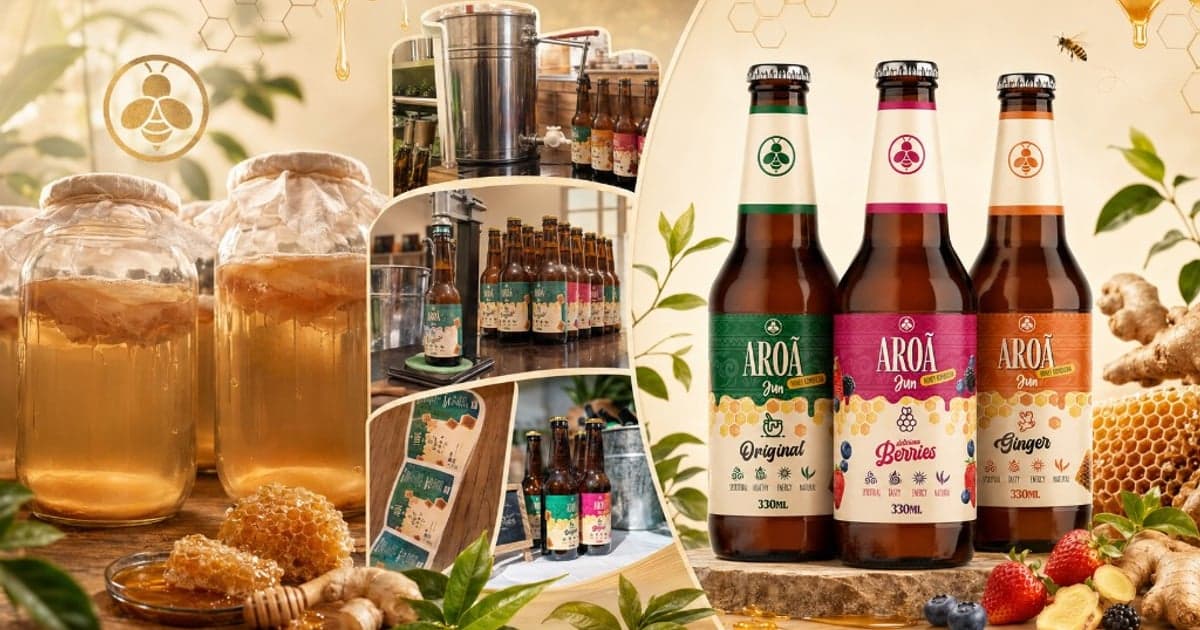
So here is the straightforward answer first. A 330 mL bottle of Aroā Original or Ginger contains 13.2 g of sugar. Berry contains 13.6 g. Those numbers come directly from our product labels.
Aroā is not sugar free, and under New Zealand food standards it is not classified as low sugar. It does, however, contain considerably less sugar than some familiar drinks. The fairest way to see that is to compare them at the same volume.
Compare drinks per 100 mL
Using 100 mL removes the distraction of different bottle and serving sizes. At the time of writing, the labels and manufacturers show:
Aroā Original and Ginger: 4.0 g of sugar per 100 mL
Aroā Berry: 4.1 g per 100 mL
Keri Premium Orange Juice: 8.2 g per 100 mL
Coca-Cola Classic: 10.6 g per 100 mL
Remedy Kombucha: described by Remedy as sugar free after fermentation, with sweeteners used to balance the tartness
Put into the same 330 mL volume, Aroā Original contains 13.2 g of sugar. The equivalent amount of Keri orange juice contains about 27.1 g, while Coca-Cola Classic contains about 35.0 g.
These figures do not make one drink automatically good or bad. Orange juice, cola, sugar-free kombucha and Jun are different products. They simply show why the number on the label is more useful than assumptions about what sounds healthy.
You can check the current figures on the Keri, Coca-Cola and Remedy websites. Recipes can change, so it is always worth checking the bottle in your hand.
Why does Jun contain sugar?
Jun begins with sweetened green tea. In our case, that sweetness comes from raw New Zealand honey. The Jun culture needs it for fermentation.
During the process, bacteria and yeast consume part of the sugars and produce acids, flavour and natural fizz. They do not necessarily use every gram. The sugar listed on the finished bottle is what remains after fermentation, not the amount of honey we started with.
Honey is still sugar
We choose raw honey because of what it brings to Jun. It gives the drink a softer, more floral character than ordinary cane sugar. But we are not going to pretend honey somehow stops counting as sugar once it is brewed.
Nutrition labels report total sugars, whether they began as honey, fruit juice or table sugar. The source affects flavour and how the drink is made, but the final number still matters.
Can Aroā be called low sugar?
No. Food Standards Australia New Zealand says a liquid food must contain no more than 2.5 g of sugar per 100 mL to make a low sugar claim. Aroā contains 4.0 to 4.1 g per 100 mL, depending on the flavour.
That is why you will not see us describe it as low sugar. We would rather give you the actual number and let you make a proper comparison. You can read the FSANZ guidance on sugar labelling here.
Why we make it this way
Our aim is not to win a race to zero. We want Aroā to taste light, balanced and genuinely enjoyable, without the strong vinegar edge that puts many people off fermented drinks.
The small amount of sweetness left after fermentation rounds out the acidity and lets the green tea, honey and real fruit or ginger come through. We do not use artificial sweeteners to replace it.
If zero sugar is your priority, there are drinks made specifically for that. If you want a gently sparkling fermented tea with a straightforward ingredient list and less sugar than the cola or orange juice examples above, that is where Aroā fits.
You can see every flavour and its full nutrition information in our online shop.